



Growth in the Minerals Sector
Worldwide mineral exports grew from the 1950’s to about 2010 annually by about 5% but not evenly over that period as the mining/minerals industry has cycles. For instance the value of minerals exports to World trade was about 12% in the early days and dropped to about 6% in later 1990s. Minerals super cycles occurred in the late 1800s to early 1900s through Western economic growth driven by the USA; post-WWII to 1965 as a result of European post-war reconstruction and Japanese economic growth then 1975 to 1990 and 2005 to 2012 with shorter cycles that probably cannot be called super cycles.
Pakistan has not participated in these cycles as it has never seen large scale mining until a medium scale mine owned by Government of Pakistan and Balochistan operated by a Chinese company MCC came on stream as a medium scale mine in early 2000s. Due to archaic mining methods the mine is effectively exhausted today (2017). There are many small scale or artisanal mines operating in Pakistan producing after initial manual processing on average 5% ore. Mostly this ore is processed to 15% concentration by others, but few have the ability to move to the concentrates required of 30% to 40% where World standard prices exist. Much is changing in Pakistan where the provinces are responsible for exploration licenses and mining leases (with the federal level being involved where foreign companies wish to mine plus in the federally administered areas and off-shore). Over the next five to 10 years Pakistan, as a mineral rich country, will be building minerals processing units and supplying significantly higher levels of minerals at higher concentrates. This will then require significantly more transport/shipping to parts of the World that manufacture products and require both large volume minerals (iron) used for construction, casings, equipment parts etc.; medium volume minerals (copper) used for construction, piping, wires, etc. and; small volume high value minerals (rare Earth metals) that are used in batteries, mobile phones, etc.
The Pakistan Minerals Sector
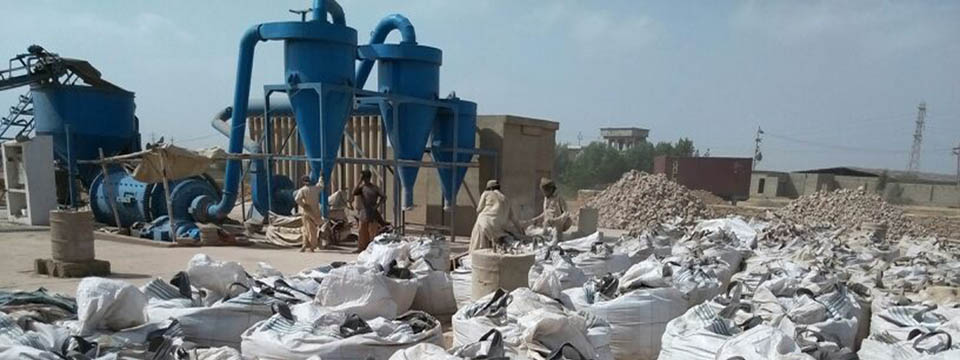
Mining of non-energy minerals in Pakistan is almost all at the small scale (artisanal) mining and very little processing of minerals has taken place other than crushing, washing and manually sorting. This can take the concentrations to about 15%. Even using this method, shipping metallic mineral concentrates requires 85% shipment of mostly waste and 15% of the targeted mineral. Mining concentrates are required to be about 35% to reach internationally published pricing for metallic concentrates. International trade in low concentration ore does not usually take place except in developing countries like Pakistan for the small scale or artisanal miners. There is no international price per ton for low ore concentration as ore needs to undergo processing at or near the extraction site in order to increase its value per unit weight prior to shipment. Ores can be a concentration of mineralization either close to the surface (up to 50 meters deep) or deep underground. Minerals are mined from the surrounding rock and delivered to the surface through mechanical means using low-technology diggers and/or loaders in the case of metallic and industrial minerals. However, Large Scale Mining (LSM) can use extremely high-technology processes to mine copper and associated metals (gold, silver, molybdenum) down to several kilometers underground. Techniques today include wireless communications even in underground mines and software to control mining processes and transportation below and above ground. This provides efficient/low cost mining.
Chrome Ore
Chrome Ore is primarily consumed for the production of Ferrochrome, a key ingredient in the manufacture of stainless steel. Its other uses are for refractory and foundry applications. MAM Enterprises (Pvt.) Ltd. has expertise in the trade of chrome ore of over 14 years, and can assure its customers quality material, meeting specifications, and timely shipments.
Talc Ore/mesh
There are Talc mines near the Pakistan and Afghanistan borders, Talc is used in many industries such as paper making, plastic, paint and coatings, rubber, food, electric cable, pharmaceuticals, cosmetics, ceramics, etc. A coarse grayish-green high-talc rock is soapstone or steatite and has been used for stoves, sinks, electrical switchboards, crayons, soap, etc. It is often used for surfaces of lab counter tops and electrical switchboards because of its resistance to heat, electricity and acids. Talc is use as a cosmetic (talcum powder), as a lubricant, and as a filler in paper manufacture.
Rock Phosphate
Phosphorite, phosphate rock or rock phosphate is a non-detrital sedimentary rock which contains high amounts of phosphate minerals. The phosphate content of phosphorite (or grade of phosphate rock) varies widely, from 4% to 20% phosphorus pentoxide (P2O5). Marketed phosphate rock is enriched ("beneficiated") to at least 28%, often more than 30% P2O5. This occurs through washing, screening, de-liming, magnetic separation or flotation. By comparison, the average phosphorus content of sedimentary rocks is less than 0.2% The phosphate is present as fluorapatite Ca5(PO4)3F typically in cryptocrystalline masses (grain sizes < 1 μm) referred to as collophane-sedimentary apatite deposits of uncertain origin It is also present as hydroxyapatite Ca5(PO4)3OH or Ca10(PO4)6(OH)2, which is often dissolved from vertebrate bones and teeth, whereas fluorapatite can originate from hydrothermal veins. Other sources also include chemically dissolved phosphate minerals from igneous and metamorphic rocks.
Salt
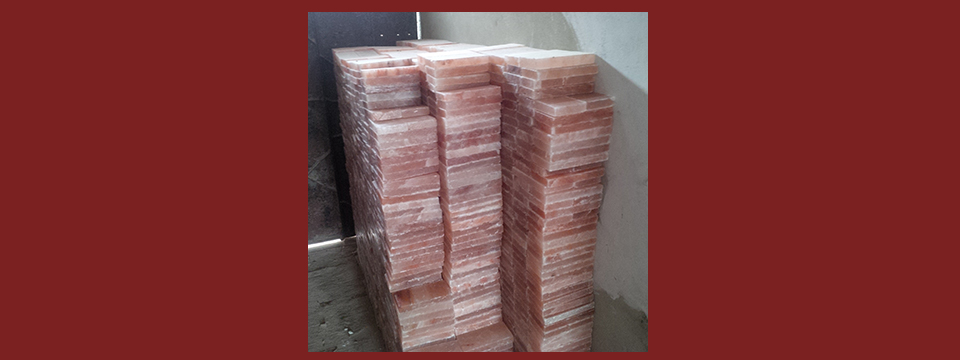
Salt Mines are located in Khewra, Jhelum District, Punjab in Pakistan, about 160 kilometers from Islamabad and 260 kilometers from Lahore. The Mines attract 40,000 visitors per year and has the second largest salt mine in the World. Situated in the foothills of the Salt Range, the Khewra Salt Mines are the oldest in the sub-continent. Salt has been mined at Khewra since 320 BC, in an underground area of about 110 sq. km. Khewra salt mine has estimated total of 220 million tonnes of rock salt deposits. The current production from the mine is 325,000 tons salt per annum. At places the rock salt is 99% pure. Salt is transparent, white, pink, reddish to beef-color red. There are beautiful alternate bands of red and white color salt and different products are produced from the material.
Iron Ore
IIron ores are rocks and minerals from which metallic iron can be economically extracted. The ores are usually rich in iron oxides and vary in colour from dark grey, bright yellow, or deep purple to rusty red. The iron itself is usually found in the form of magnetite (Fe 3O 4, 72.4% Fe), hematite (Fe 2O 3, 69.9% Fe), goethite (FeO(OH), 62.9% Fe), limonite (FeO(OH)·n(H2O), 55% Fe) or siderite (FeCO3, 48.2% Fe).
Megnesite Ore
Magnesite is a mineral with the chemical formula MgCO3 (magnesium carbonate). Mixed crystals of iron(II) carbonate and magnesite (mixed crystals known as ankerite) possess a layered structure: monolayers of carbonate groups alternate with magnesium monolayers as well as iron(II) carbonate monolayers. Manganese, cobalt and nickel may also occur in small amounts.